

Japan is often seen as a futuristic, highly organized destination, but when it comes to accessibility, the reality is more nuanced. For disabled travelers, the experience can range from impressively accommodating to unexpectedly challenging. The good news? Cities like Nagoya are actively working to close that gap. And, in many ways, they’re leading the charge.
Article Contents
The Reality: Challenges of Traveling with a Disability in Japan
Traveling in Japan with a disability requires preparation, flexibility, and sometimes patience.
One of the biggest challenges with accessibility in Nagoya and Japan overall is inconsistency. While major cities and transportation systems are generally accessible, smaller businesses, older buildings, and traditional sites may not be. Narrow doorways, steps at entrances, and compact interiors are common, especially in older neighborhoods.
Even when accessibility exists, it may not always be obvious or easy to navigate. For example:
- Elevators may be tucked away or require staff assistance
- Accessible hotel rooms often need to be booked directly rather than online
- English-language accessibility information can be limited
Cultural factors also play a role. Japan values independence and non-intrusion, so assistance isn’t always proactively offered. In other words, you may need to ask, and expect to do so more than once.
Japan is often technically accessible, but not always comfortably so. Don’t be afraid to speak up, even if it means overriding the expectation of “politeness” to get your needs met.
The Progress: Accessible Travel and Support Systems in Japan
Despite these challenges, Japan has made significant strides in accessibility, especially in urban areas.
Public Transportation
Cities like Nagoya have invested heavily in accessible transit. The Nagoya Municipal Subway is a strong example:
- Elevators at all stations
- Extensive escalator networks
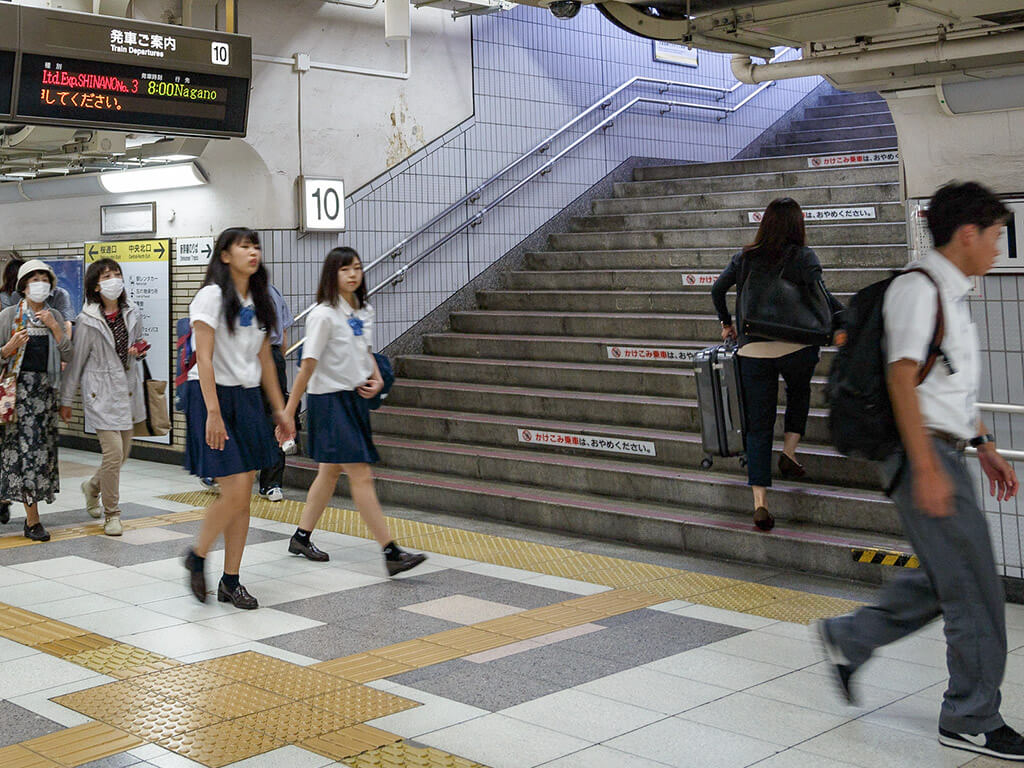
- Tactile paving for visually impaired travelers
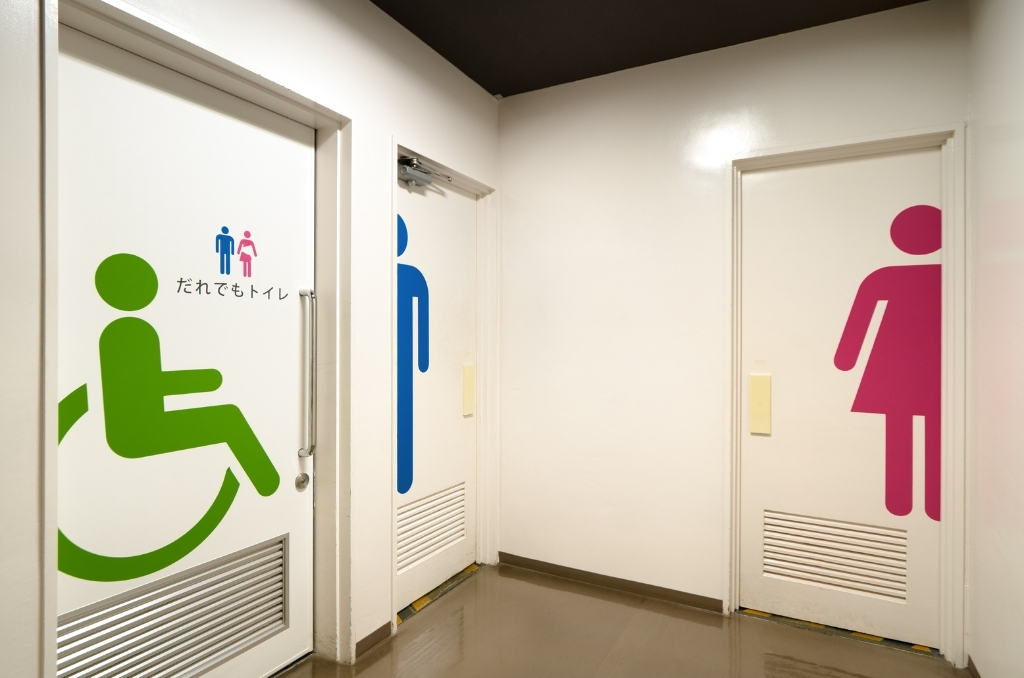
- Multipurpose restrooms with space for wheelchairs and caregivers
Station staff are also trained to assist, including setting up ramps for train boarding when needed.
Barrier-Free Facilities and Urban Planning
Nagoya stands out for its proactive approach. The city launched the Nagoya Barrier-Free Outing Navigator, a centralized, multi-lingual platform designed to help travelers find accessible locations and accommodations. It aims to ensure that “anyone can go out with peace of mind.”
This initiative reflects a broader shift in Japan toward “barrier-free awareness”, which includes not just physical infrastructure but also service and attitude improvements.
Examples of Accessible Travel Spaces
From the official Nagoya accessibility database, several locations stand out:
- Arakogawa Park – spacious outdoor areas with accessible pathways
- Tsuruma Park – a central green space with good facilities
- Shirotori Garden – a cultural site working toward improved accessibility
- ANA Crowne Plaza Hotel Grand Court Nagoya – accessible accommodation options
- The Royal Park Canvas Nagoya – centrally located and listed as barrier-free
Even event venues like Albe Hall Nagoya are designed with fully step-free layouts, wide pathways, and accessible restrooms, making movement seamless for wheelchair users.
Accessibility at Cultural Sites
Accessibility is also being integrated into historic preservation. For example, plans for Nagoya Castle include specialized elevators to allow access to all floors while preserving the building’s traditional design.
This is a positive first step in making cultural tourism in the city more accessible for disabled travelers.
Essential Japanese Phrases for Accessible Travel
Knowing a few key phrases can make a huge difference. Here are some helpful ones across different accommodation requirements:
General Assistance
- 助けてください (Tasukete kudasai) – Please help me
- 手伝ってもらえますか? (Tetsudatte moraemasu ka?) – Can you assist me?
Mobility & Wheelchair Access
- 車椅子です (Kuruma isu desu) – I use a wheelchair
- バリアフリー席、お願いします (Baria furī seki, onegaishimasu) – A barrier-free seat, please (for booking train tickets)
- スロープ、お願いします (Suropu, onegaishimasu) – The ramp, please (for riding trains and buses)
- エレベーターはどこですか? (Erebētā wa doko desu ka?) – Where is the elevator?
- バリアフリーですか? (Baria furī desu ka?) – Is this barrier-free?
Visual Impairment
- 見えません (Miemasen) – I cannot see
- 点字はありますか? (Tenji wa arimasu ka?) – Is there braille?
Deafness
- 耳が聞こえません (Mimi ga kikoemasen) – I cannot hear/I’m Deaf
- 書いてください (Kaite kudasai) – Please write it down
Restrooms & Facilities
- バリアフリーのトイレはどこですか? (Baria furī no toire wa doko desu ka?) – Where is the accessible restroom?
As a note, there are few ways to say “accessible” in Japanese, but the most universal is “barrier-free,” or Baria furī (バリアフリー). You will see this terminology used often on hotel booking sites and on restroom signs.
These phrases can help bridge communication gaps and make interactions smoother. And you can always use translator apps like Deepl and Google Translate to assist you as well.
Know Before You Go: Important Tips for Disabled Travelers

Beyond online resources and learning a few key phrases in Japanese, there are several more measures you can take to make your trip as smooth as possible:
- Pick up a help mark card.
These red, rubber tags signify invisible disabilities that are not easily recognizable, but may require assistance at any time. Think early-stage pregnancy, chronic illnesses, chronic fatigue, and more. Wearing one of these makes it easier to sit in the seating for persons with disabilities on public transportation.
Help mark cards are available for pick-up at most train stations in Tokyo. You do not need to show any I.D. or “prove” your disability, as it is run on a trust-based system.
- Give yourself plenty of extra time.
Navigating Japan’s public transportation can be especially time-consuming if your mobility is affected. Elevators and accessible restrooms are far from the ticket gate, train station staff are assisting multiple people at once, or people neglect to move out of the way. Be sure to give yourself plenty of extra time between transfers to ensure you get to your destination on time.
- Get a temporary certificate for your guide dog.
Although Japanese guide dogs are legally recognized in Japan, overseas guide dogs are not. To combat this, the Japan Guide Dog Association has created a temporary certificate for overseas dog users, which can be accessed on their website. You will need to contact them through your home organization, so it’s recommended to start the process at least six weeks prior to your travels.
- Read up on voltage for wheelchair battery charging.
Outlets in Japan may have different voltage levels and plugs than your outlets back home. To ensure you can charge your wheelchair batteries, it’s recommended to bring any adapters and transformers you may need with you. You can read further about charging wheelchair batteries in Japan here.
- Translate all documentation for your medications.
Japan is particularly strict with bringing prescription drugs into the country. Even Adderall is strictly prohibited. You are allowed to bring up to one month of prescription medication only with a doctor’s prescription and a letter stating the purpose of the drug. Of course, we advise translating these documents into Japanese.
If you are carrying more than a month’s supply and/or need to bring equipment such as syringes, a CPAP machine, etc., you are required to bring a Yunyu Kakunin-sho and present it at customs. You can fill out your application here. Note that this should be done at least two weeks prior to departure.
Now that you have everything you need, how about some destinations to add to your itinerary?
Accessibility in Nagoya and Why the Chubu Region Deserves Your Attention
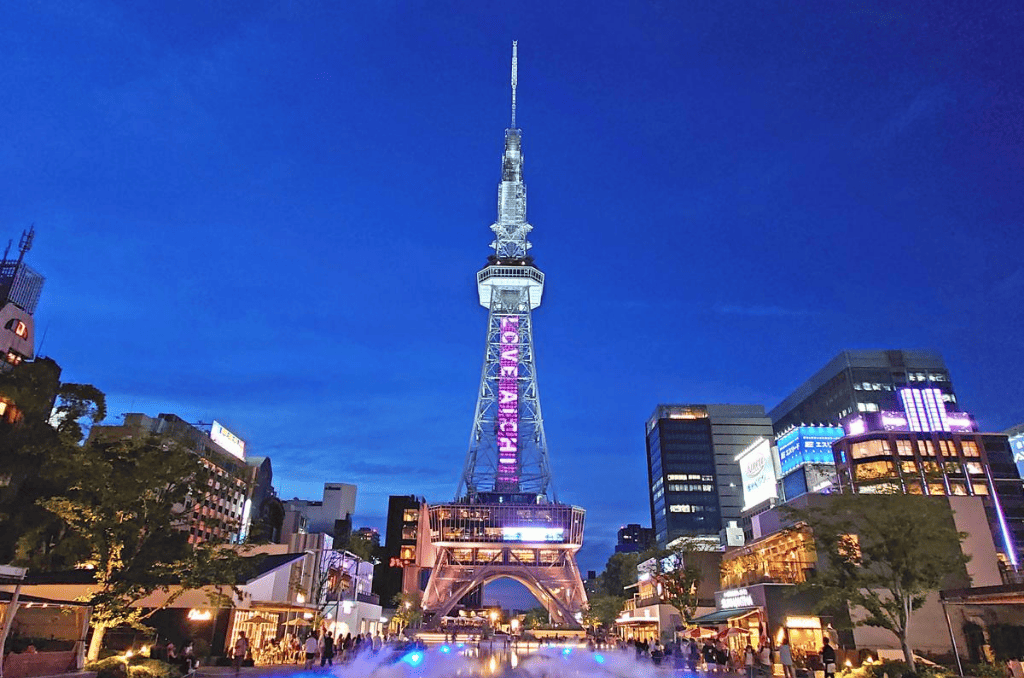
Let’s address the elephant in the room: Nagoya has a reputation for being “boring.”
It’s not.
Nagoya is simply underexplored, and that’s exactly why it shines, especially for accessible travel.
Unlike Tokyo or Kyoto, Nagoya offers: less crowded attractions, more spacious infrastructure, and a growing ecosystem of accessibility-focused resources.
The Chubu region surrounding Nagoya adds even more appeal, with a mix of nature, traditional culture, and modern cities, often with fewer barriers (both physical and logistical).
With tools like the Nagoya Barrier-Free Outing Navigator, planning becomes significantly easier. You can identify accessible parks, hotels, and attractions in advance, reducing uncertainty and stress.
And if you want curated ideas, Nagoya is not boring offers easy day trips from Nagoya that highlight the city’s hidden character.

Final Thoughts
Traveling in Japan with a disability isn’t always effortless, but it’s increasingly possible, and in places like Nagoya, it’s improving fast.
With expanding infrastructure, thoughtful urban planning, and dedicated resources like the Barrier-Free Outing Navigator, Nagoya is quietly becoming one of Japan’s most accessible destinations.
So if you’re looking for a place that combines practicality, culture, and fewer crowds, consider adding Nagoya to your Japan itinerary.
Did you enjoy this article?
Make sure to also check our other posts about Nagoya and trust us if we say Nagoya is not boring!
Be sure to follow us on Facebook for new articles every week, and see our Instagram for pictures and stories about Nagoya!
Tag us
If you have done any day trips from Nagoya you would like to share, tag us on social media with #nagoyaisnotboring