

When travelers plan a trip to Japan, the golden trio of Tokyo, Kyoto, and Osaka tends to dominate the itinerary. And for good reason: they’re vibrant, historic, and endlessly fascinating. But tucked between these giants lies Nagoya, a city that rarely shouts for attention, and that’s exactly its charm.
Nagoya offers something different. It’s quieter, more spacious, and refreshingly unpretentious. Here, beauty isn’t curated for crowds; it’s woven into everyday spaces: temples where locals quietly pray, gardens and nature spots where time seems to slow, and neighborhoods that feel lived-in rather than staged.
If you’re looking to experience Japan at a gentler pace, Nagoya rewards those who wander.
Article Contents
A City of Quiet Spiritual Corners
Nagoya’s temples and shrines may not have the fame of Kyoto’s, but they carry a serene authenticity that’s hard to replicate.
Atsuta Shrine is perhaps the city’s most significant spiritual site, surrounded by dense forest that muffles the sounds of the city. Walking along its shaded paths feels like stepping into a different era. Here, you’ll often find yourself sharing the space with just a handful of visitors or locals going about their daily rituals.
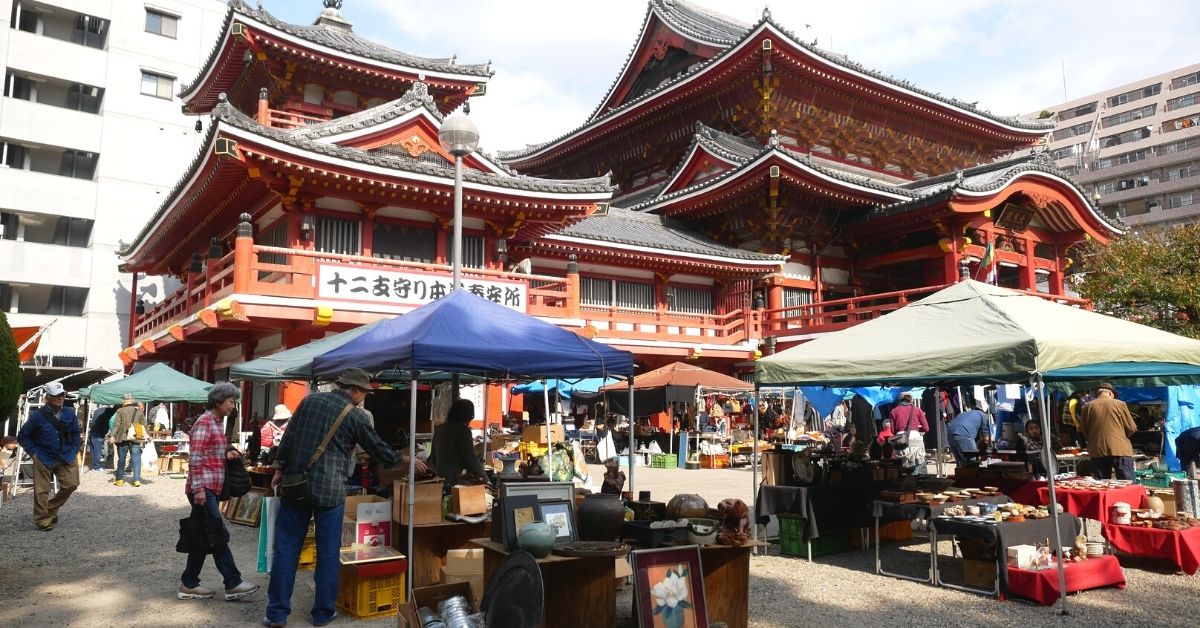
Osu Kannon offers a contrasting atmosphere: lively yet grounded. While the nearby shopping streets buzz with energy, the temple itself remains a place of calm reflection. It’s this balance of vibrancy and stillness side by side that defines much of Nagoya.
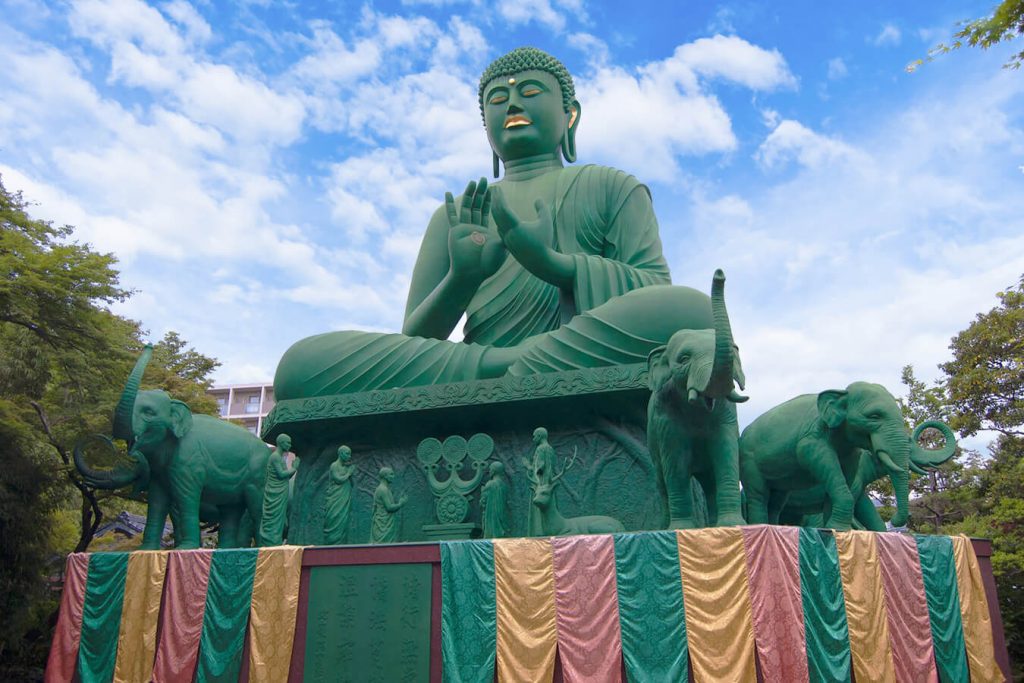
Tucked away in a quieter residential area, Toganji Temple feels almost hidden from the city’s rhythm. Its most striking feature is the large green Buddha statue, an unusual sight that somehow blends naturally into the peaceful surroundings. The temple grounds are rarely crowded, and there’s a stillness here that invites you to linger, whether you’re pausing by the statue, listening to the rustle of leaves, or simply taking in the understated beauty of a place that doesn’t try to impress.
Gardens That Invite You to Linger
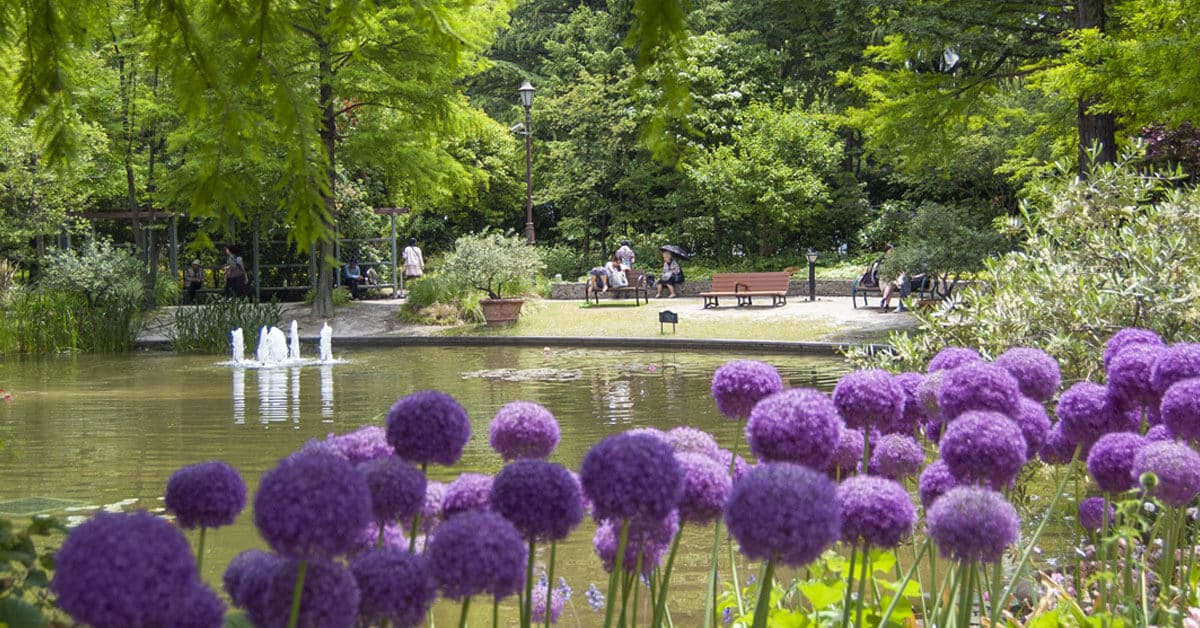
Nagoya’s gardens are not just for viewing; they’re for slowing down.
Tokugawa Garden is a standout, blending traditional landscaping with a sense of quiet intimacy. Winding paths lead you past ponds, waterfalls, and carefully placed stones, each view revealing itself gradually. It’s the kind of place where you lose track of time and feel absolutely no rush to leave.
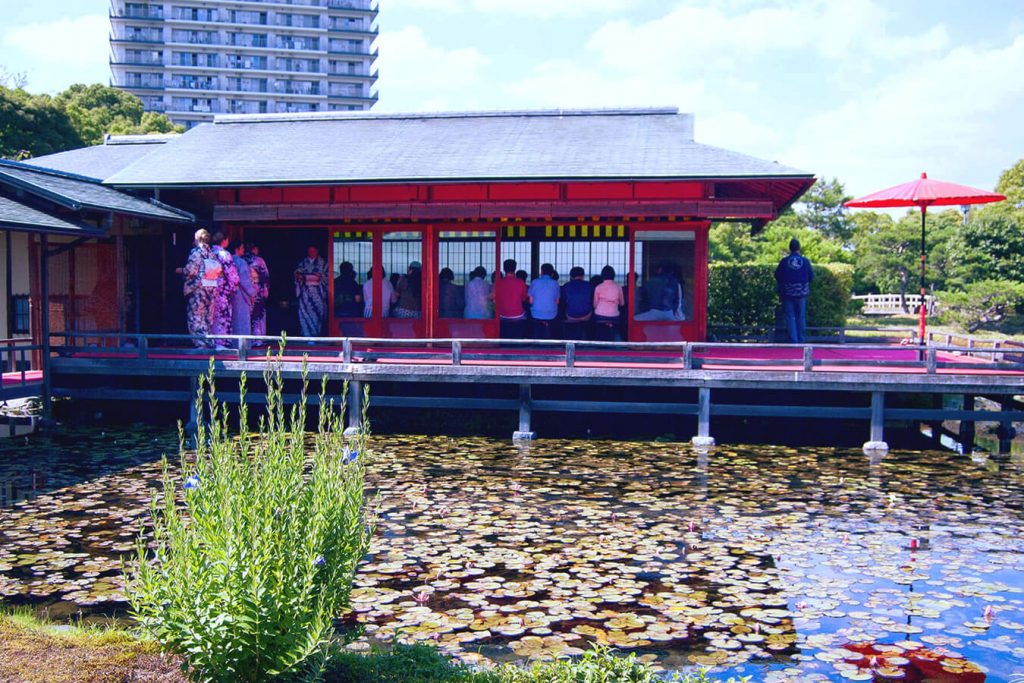
Shirotori Garden, one of the largest Japanese gardens in the region, feels expansive yet never overwhelming. Inspired by the natural landscape of central Japan, it offers seasonal beauty: cherry blossoms in spring, lush greenery in summer, fiery leaves in autumn, and illuminations in winter. Even at its most colorful, it remains peaceful. You can even take in the sight with Japanese green tea and a confectionery at Seiutei, the tea ceremony house in the center of the grounds.

Parks and Nature Within Reach
One of the Nagoya’s strengths is how easily accessible its nature is.
Tsuruma Park is beloved by locals, especially during cherry blossom season, yet it never feels as crowded as parks in larger cities. Outside of peak bloom, it becomes a tranquil green space perfect for reading, picnicking, or people-watching.
For a deeper escape, the Higashiyama area offers a blend of botanical gardens, forested paths, and gentle hills. It’s a place where you can spend hours walking without a fixed plan, just following whatever path looks inviting.
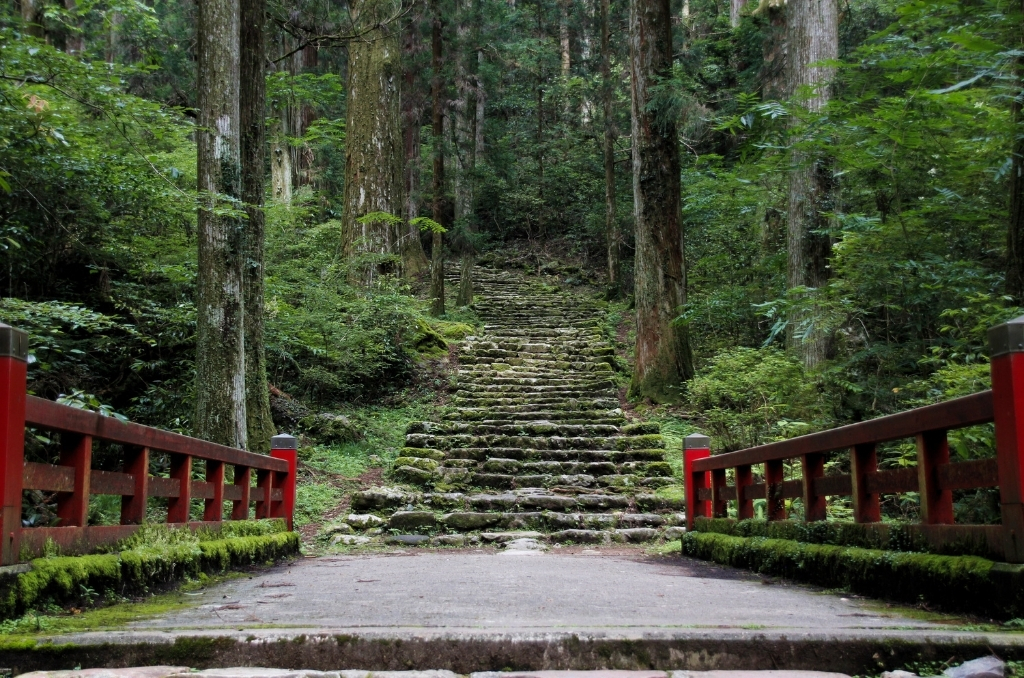
Venture a bit farther out, and you’ll find Mt. Horaiji, a majestic nature spot that feels far removed from urban life. Known for its ancient cedar trees and moss-covered stone steps, the mountain offers a contemplative hiking experience rather than an adrenaline-filled climb. You can add to the sense of calm with a tea ceremony and more on our Sacred Mt. Horaiji Nature Hike, taking in the viewpoints with our local guides.
Whether you’re in the heart of Nagoya or the outskirts of Aichi Prefecture, nature is never far.
Neighborhoods That Tell Stories Softly
Nagoya doesn’t have the same concentration of preserved historic districts as Kyoto, but what it does have feels more personal.
Shikemichi, a small historical street near the city center, is easy to miss, and that’s part of its appeal. With its old storehouses, narrow lanes, and riverside setting, it offers a glimpse into Nagoya’s past without the crowds. It’s the kind of place where you can walk slowly, noticing details: weathered wood, tiled roofs, the quiet flow of water beside you.
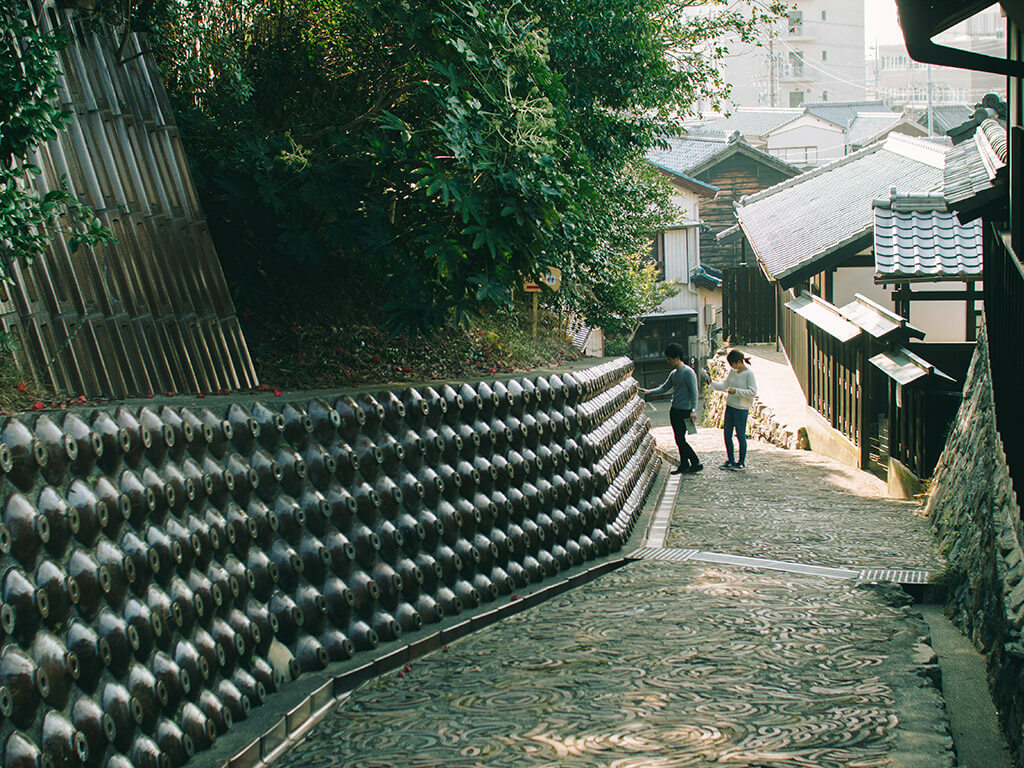
A short trip south brings you to Tokoname, a coastal town known for its pottery and slow, nostalgic atmosphere. Walking along its ceramic-lined paths, where walls, chimneys, and even sidewalks are shaped by centuries of craftsmanship, feels like stepping into a living workshop. Anime fans might recognize it as the setting that inspired the film A Whisker Away, and there’s a certain whimsical, slightly dreamlike quality to the town that reflects that connection. Yet even without that context, Tokoname stands on its own as a place where time stretches gently, inviting you to wander without a plan.
Elsewhere, everyday neighborhoods reveal their own understated charm. Small cafes tucked into residential streets, local shops that have been around for generations, and the absence of constant tourist traffic all contribute to a feeling of authenticity.

The Beauty of Being Overlooked
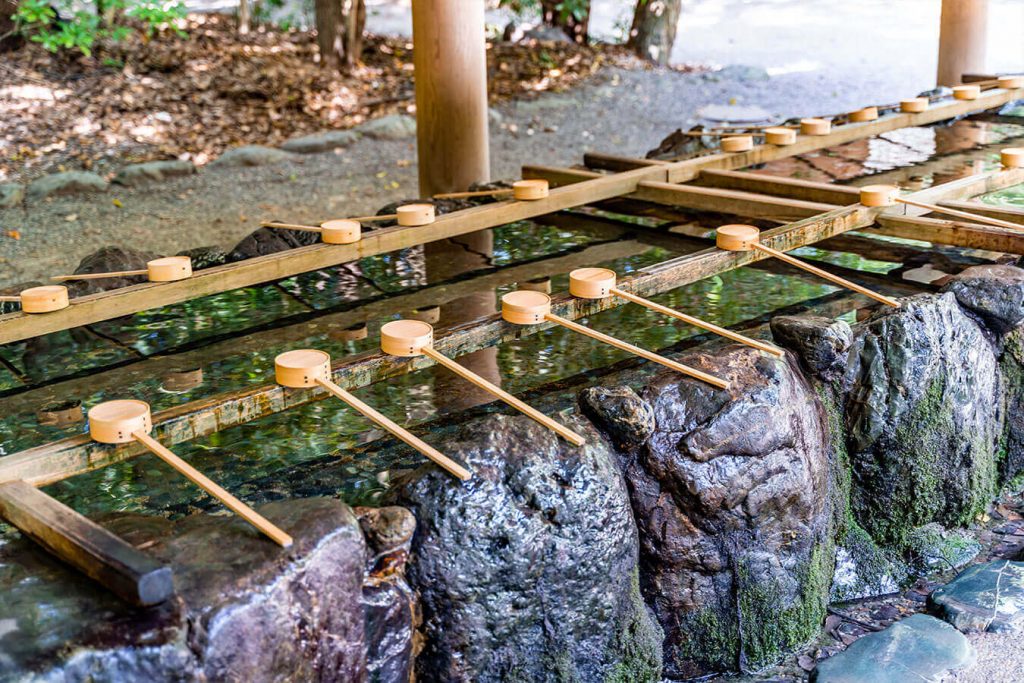
Nagoya doesn’t try to compete with Japan’s most famous destinations, and that’s exactly why it stands out.
There’s a certain freedom in visiting a place that isn’t on every must-see list. You don’t feel pressured to check off landmarks or navigate through crowds. Instead, you can explore at your own pace, discovering moments of beauty that feel like your own.
In Nagoya, a quiet shrine path, a garden bench by the water, or a nearly empty historical street can become the highlight of your trip. It’s a city that invites you not to rush, but to notice.
So if you’re planning a journey through Japan and wondering whether to add another major city to your list, consider this: instead of more noise, more crowds, and more urgency, Nagoya offers something rarer: a chance to experience Japan softly.
And sometimes, that’s exactly what travel should be.
Did you enjoy this article?
Make sure to also check our other posts about Nagoya and trust us if we say Nagoya is not boring!
Be sure to follow us on Facebook for new articles every week, and see our Instagram for pictures and stories about Nagoya!
Tag us
If you have done any day trips from Nagoya you would like to share, tag us on social media with #nagoyaisnotboring